My first pool cue came from a sporting goods store sometime in the early 1980s. I had no idea what I was buying, only that is was a 2-piece cue with a nice hard case to carry keep it safe. Previous to that, all I knew was that the 20-ounce house cue at my regular bar, felt right in my hands. When I bought that 2-piece cue, it that felt similar and called it good.
I didn’t know about tip diameters. I didn’t know about shaft deflection or wrap materials or joint types. I didn’t even know that my first 2-piece cue I bought was a knockoff of a McDermott. A teammate had to point out the suspicious clover logo at the butt end.
The thing is, I just didn’t know how much there was to learn. And I’m not alone. Many players start out that way, they grab what feels comfortable and figure out the details later, if ever. This article is the breakdown I wish I had known back then.
Cue Weight – More Than Just Feeling
Pool cues typically range from 17 to 21 ounces, with 19 to 20 ounces being the most common for recreational players. Weight affects how much force transfers to the cue ball on contact.
A heavier cue delivers more power with less effort on the break, usually a thicker shaft and tip. Some people prefer a thinner cue that weighs less, the lighter cue gives you more control on soft shots and position play.
That 20-ounce bar cue I used worked very well for me.
Length – Standard Sizes
The standard cue length is 57 to 58 inches. That covers the vast majority of players at average height shooting from a normal stance. If you’re significantly taller or shorter than average, there are other cues available to use. You want a length that helps your game by keeping your bridge hand at a natural, comfortable distance from your body.
Length also matters for the room you’re playing in. If you’re shooting in a tight space, near a wall, in a basement, anywhere your backstroke gets cut short, a shorter cue is the answer.
Tip Diameter – Size does matter
This is something most beginners don’t ever consider. Tip diameter, measured in millimeters, and determines the contact area between your cue and the cue ball. Standard tips run from12mm to 13mm, custom tips tend to be 11mm -12mm.
A wider tip gives you a larger contact area, which is more forgiving on off-center hits. A narrower tip makes applying English and spin more precise, but also more demanding. That heavy house cue I loved? Almost certainly a 13mm tip. It was a magic cue, even with a bigger tip, I had great control when executing a cut or draw shot.
Years later, when I got more invested about the game, it was recommended that I replace my stock Action cue tip, with a Kamui medium-hard tip. I shot well and my game improved.
The more I played, I learned the value about certain tip diameters and hardness, and how that can affect your game. The Kamui tip changed how the cue felt on contact immediately, more responsive, more feedback, more control.
Tip Hardness – Soft, Medium or Hard
Tip hardness affects how the tip compresses on contact with the cue ball, which in turn affects how much spin you can generate and how the shot feels.
Soft tips compress more on contact, which increases the dwell time between tip and ball. More dwell time means more spin transfer, great for players who rely heavily on spin or draw shots. The downside is that soft tips mushroom faster and require more frequent maintenance and replacement.
Hard tips compress less, transfer less spin, but last significantly longer and hold their shape better. Good for players who prefer a consistent, predictable feel over maximum spin control.
Break cues tend to have a phenolic tip. They are a hard tip, specifically used for breaking a rack.
Medium tips sit in between and are the most common on house cues, and inexpensive 2-piece cues. The Kamui Clear I settled on is a medium-hard, a good balance of control, spin capability, and durability that suits the way I play.
Shaft Material – Maple, Carbon Fiber and Everything Between
For most of pool’s history, cue shafts were made from hard maple. It’s still the most common material and perfectly suited to the game, strong, consistent, and available in a wide range of quality levels.
My first cue in many years, a Dufferin, I bought from a teammate, has a maple shaft. Still plays well.
Carbon fiber shafts changed the conversation. They’re stiffer, more consistent, less affected by humidity and temperature, and they deflect less.
After years of playing on maple, I replaced my custom cue’s hard maple shaft with a carbon fiber and noticed the difference immediately. Aim points that I had been unconsciously compensating for were suddenly off. I had to relearn some of my instincts. That adjustment period is real, but the consistency on the other side of it is worth it.
Fiberglass shafts exist as a mid-range option, more consistent than entry-level maple, less expensive than carbon fiber. Worth considering if you’re upgrading from a starter cue but not ready to commit to a full carbon fiber investment.
Deflection Changes Everything
When you hit the cue ball off-center to apply English, the shaft bends slightly on contact and the cue ball deflects away from your intended aim line. This is called squirt or deflection, and every shaft does it to some degree.
Low-deflection shafts, whether achieved through tapered maple design or carbon fiber construction, reduce this deflection, meaning the ball goes closer to where you aimed.
High-deflection shafts require you to compensate by adjusting your aim point, which experienced players do instinctively without even thinking about it.
This is why switching shaft types can temporarily throw off your game even if the new shaft is objectively better. Your instincts were calibrated to the old deflection. Give it time.
Wrap or No Wrap – Covering the Butt
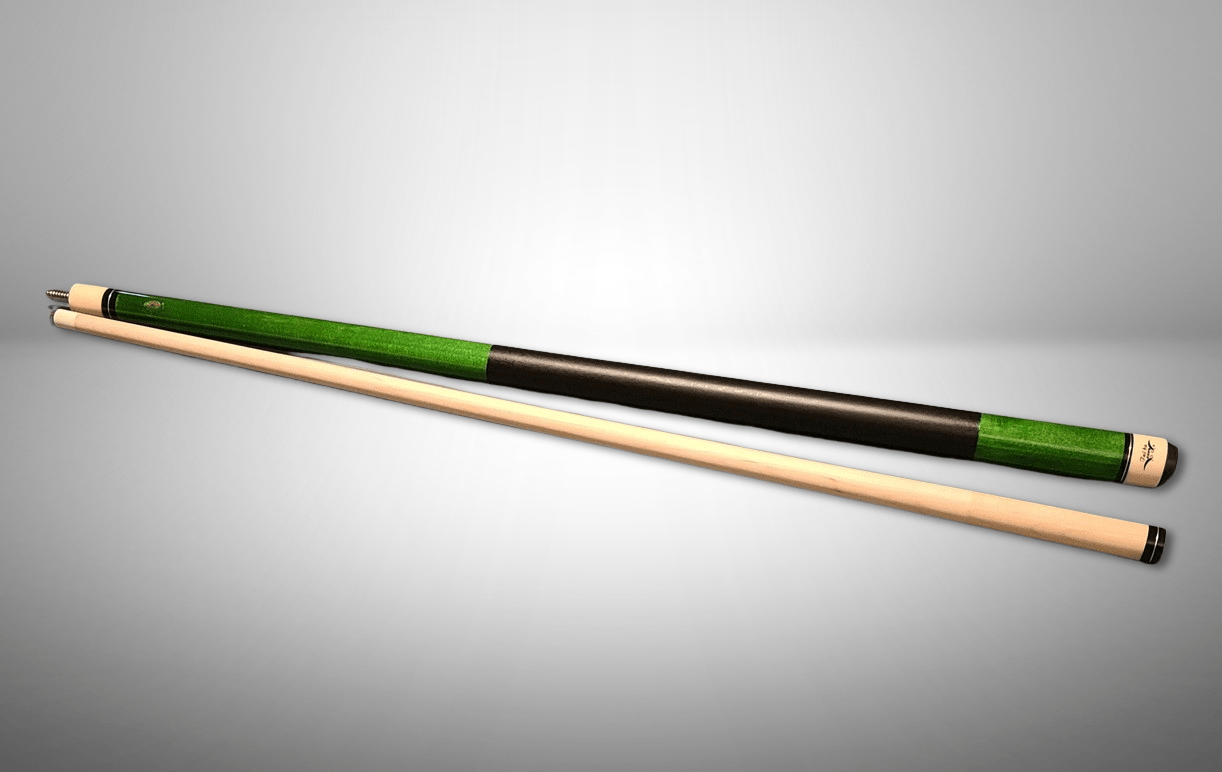
The wrap is material that covers the grip area of the butt. My first two-piece cue had an Irish linen wrap, I didn’t know that’s what it was called, I just knew it felt different from the bare wood house cues. Linen is the most traditional option, offering a slightly textured grip that absorbs moisture without becoming slippery.
No-wrap cues, bared surfaces, are popular, particularly on higher-end customs where the wood itself is part of the aesthetic.
Wrap preference is personal. The best advice is to try a few and see what your shooting hand prefers. It’s one of the few specs where there’s no technical right answer, just what feels right in your hand.
Joint Type – The Connection Matters
The joint is where your two-piece cue connects. Joint types vary by material, stainless steel, wood-to-wood, and by pin design. The joint affects how solid the cue feels on contact and how vibration travels through the stick.
The most common joint pin sizes are
- 5/16 x 18 – the most universal, found on the majority of production cues
- 5/16 x 14 – common on Predator and some higher-end cues
- 3/8 x 10 – found on older and some custom cues
- Uni-Loc – Predator’s proprietary quick-release system
- Radial – used by several manufacturers, a pin-free design
The 5/16 x 18 is the standard that most players will encounter. It’s worth knowing because if you ever want to your cue shaft by adding a carbon fiber shaft to an existing butt, you will need to know the pin size to match.
Pro Tip: When you’re shopping used cues, always screw the cue together and check for wobble or play at the joint. Any looseness there is a red flag.
Rack It Up
I went from a no-name sporting goods store cue, and thirty years later, came to own a vintage Dufferin. From there, I picked up the to Action with a Kamui tip upgrade, and finally to a custom cue with a carbon fiber shaft.
Each step taught me something about cues, stuff I never even knew, let alone cared about before. Now I’m sharing my little bit of knowledge with you.
When it comes time for you to buy your first pool cue, don’t be swayed by the brand or style. Find one that works for you. A mid-range cue with a quality tip will provide you with many years of play.